Lane Coburn & Associates provides specialized Neher–McGrath calculations to evaluate conductor temperatures and allowable ampacity in underground electrical distribution systems.
Our approach focuses on identifying the most demanding thermal conditions throughout your project, providing accurate engineering results while minimizing unnecessary calculations and controlling costs.
THE ENGINEERING PROCESS
How It Works
Submit Your Project
Send us your project specifications, electrical site plans, and available underground duct bank information.
Our engineers review the proposed installation to understand the electrical system and identify the duct bank locations most likely to experience the highest conductor temperatures. We then provide a detailed proposal listing the locations where we recommend calculations, the scope of the work, and the associated engineering fees.
How We Identify Worst-Case Conditions
Our engineering team evaluates the underground electrical system to identify locations most likely to experience elevated conductor temperatures. We evaluate the load profile for every study and assess potential soil dry-out where applicable.
We consider these factors when selecting locations for analysis.
- Maximum normal and emergency electrical loading.
- Duct bank configuration and conduit spacing.
- Maximum burial depth and elevation changes.
- Mutual heating between adjacent circuits and duct banks.
- Cable sizes, insulation types, and temperature ratings.
- Native soil thermal resistivity.
- Engineered thermal backfill and concrete encasement.
- Conduit materials and thermal limitations.
- Ambient earth temperature and environmental conditions.
- Other installation conditions affecting heat dissipation.
These factors help determine which duct bank sections should be analyzed to represent the project's critical thermal conditions. The number of recommended calculations is established during our preliminary engineering review.
Accept the Proposal and Confirm the Inputs
Once you accept the proposal, we’ll send you a list of the information we need to complete the calculations. Please provide detailed duct bank cross-sections for each location identified in the proposal, along with the other requested project data.
We’re available for a Zoom meeting to review your project’s specific parameters, clarify outstanding questions, and confirm what information is still needed.
We Perform the Analysis and Deliver Your Reports
Once we receive all required information, we perform the agreed calculations for each selected duct bank section using established Neher–McGrath methods, current engineering software, and our proprietary calculation tools. We provide the draft calculations for submission to the project engineer of record for review and approval.
After the engineer of record approves the calculation inputs, assumptions, and draft results, we deliver a final PDF containing all calculations and an executive summary signed and stamped by a Professional Engineer licensed in the applicable jurisdiction.
Our Engineering Methodology
Each selected duct bank section is analyzed using established Neher–McGrath engineering principles, current calculation software, and proprietary analysis tools. The calculations evaluate
- Conductor operating temperatures.
- Allowable cable ampacity.
- Cable insulation temperature limitations.
- Heat transfer through conduits, concrete, backfill, and soil.
- Mutual heating between adjacent circuits.
- Shield and sheath losses, where applicable.
- Thermal performance under specified loading conditions.
- Compliance with established project design criteria.
When thermal limitations are identified, our engineers can evaluate alternative installation configurations and recommend practical design modifications. We offer 2D numerical analysis and finite element method (FEM) modeling when project specifications call for it or when complex installation conditions warrant a more detailed thermal analysis.
Duct Bank Optimization
Reduce Construction Costs Without Compromising Cable Performance
We analyze critical locations along the cable route to identify where you can reduce concrete and engineered thermal backfill while keeping conductor temperatures within specified limits.
YOUR ENGINEERING PACKAGE
What You Receive
Detailed calculations for the selected sections, supported by a comprehensive project executive summary.
- Detailed thermal analysis reports for each selected duct bank section.
- Calculated conductor temperatures and allowable ampacity.
- Documentation of engineering assumptions and calculation variables.
- Identification of thermal limitations and potential installation concerns.
- Recommended design modifications where necessary.
- A comprehensive project executive summary.
- Final engineering documentation signed and stamped by a licensed Professional Engineer.
View Complete Engineering Deliverables
Individual Section Reports
Each report documents the applicable engineering inputs, assumptions, and calculated results. Information may include
- Conductor Characteristics
- Conductor size, material, insulation type, voltage rating, and allowable operating temperature.
- Electrical Loading
- Normal and emergency currents, circuit configurations, and applicable operating conditions.
- Duct Bank Geometry
- Conduit dimensions, spacing, arrangement, circuit locations, and concrete encasement dimensions.
- Installation Depth
- Burial depths, elevation changes, and their effects on heat dissipation.
- Soil and Backfill Properties
- Native soil thermal resistivity, moisture considerations, concrete properties, and engineered backfill characteristics.
- Mutual Heating
- Thermal interactions between adjacent circuits and duct banks.
- Conduit Materials
- Conduit types, dimensions, thermal characteristics, and applicable temperature limitations.
- Environmental Conditions
- Ambient earth temperature and other relevant installation conditions.
- Cable Losses
- Conductor losses and applicable metallic shield or sheath losses.
- Thermal Results
- Calculated conductor temperatures, allowable ampacity, operating margins, and identification of thermal deficiencies.
- Engineering Recommendations
- Suggested modifications to cable sizing, conduit spacing, burial depth, duct bank geometry, or thermal backfill when necessary.
Comprehensive Executive Summary
The executive summary consolidates the results of the analyzed sections and provides an overall evaluation of the project's underground electrical system. It identifies
- Sections evaluated.
- Critical thermal conditions.
- Calculated operating temperatures.
- Compliance with project design criteria.
- Locations requiring corrective measures.
- Recommended design modifications.
- Overall engineering conclusions.
Final engineering documentation will be reviewed, signed, and stamped by a Professional Engineer licensed in the applicable project jurisdiction.
REPORT EXAMPLES
View Sample Engineering Reports
Explore examples of our engineering calculations to see the level of detail provided in our deliverables. Select a report to open the interactive viewer.
Advanced modeling is available when project conditions require additional thermal evaluation. Not every project requires numerical or FEM analysis.
Lane Coburn Software in Development
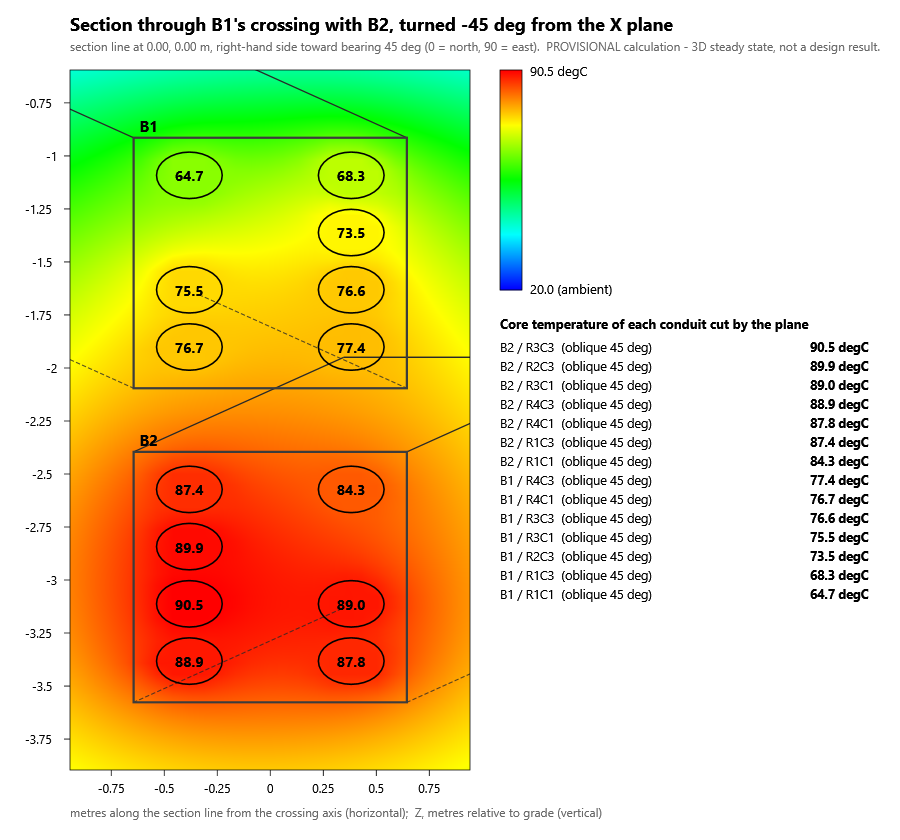
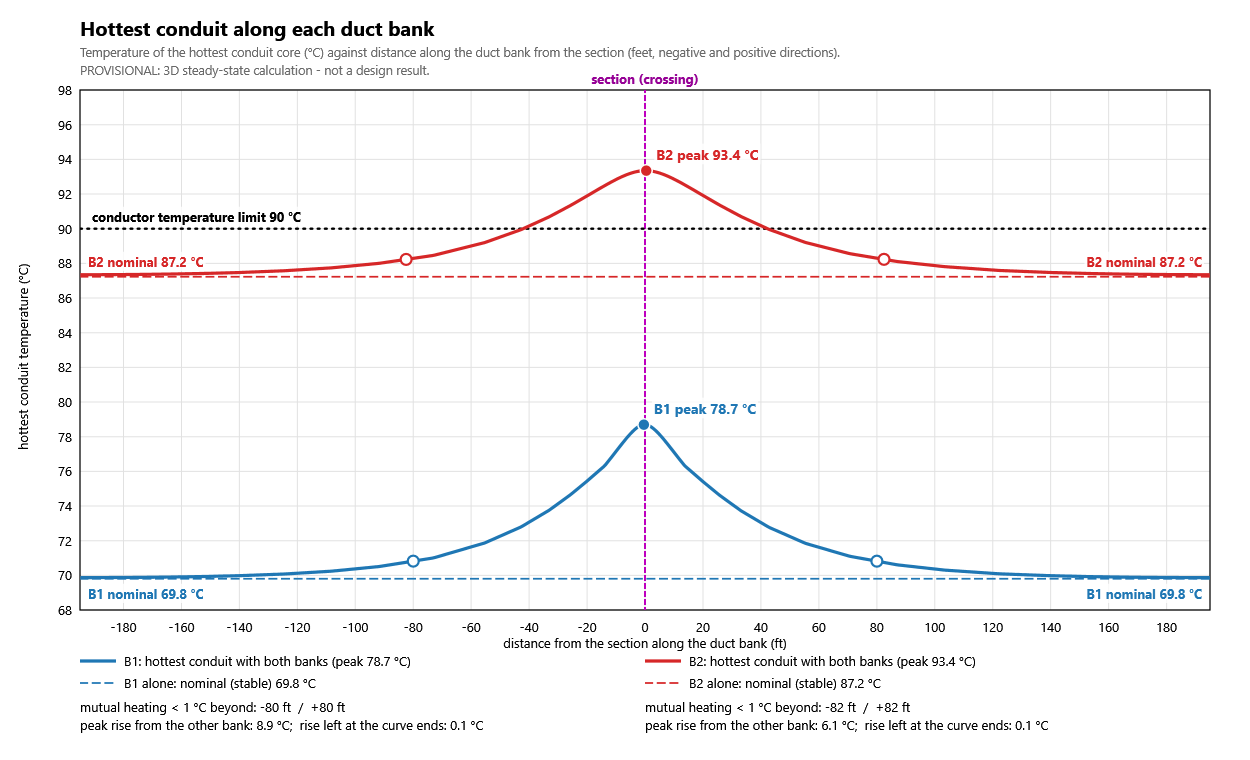
Cable View 3D shows how conductor temperatures vary at underground duct bank crossings.
START YOUR PROJECT
Request a Project Review
Send us your project specifications, electrical site plans, and available underground distribution system information. Our engineering team will review your project, identify the recommended analysis locations, and provide a project-specific proposal.